
Is your facility prepared to implement the new NFPA 70B requirements?
NFPA 70B has evolved from a recommended practice into the Standard for Electrical Equipment Maintenance, placing greater emphasis on documented maintenance programs, risk-based maintenance strategies, and ongoing program management. ERS helps organizations support compliance through Governing Policy development, Site Audits, Electrical Maintenance Plans, training, and technical consulting that strengthen electrical safety, improve equipment reliability, and support long-term operational performance.
What is NFPA 70B, standard for electrical equipment maintenance?
NFPA 70B, Standard for Electrical Equipment Maintenance, establishes the requirements for developing, implementing, and maintaining an effective Electrical Maintenance Program (EMP). The standard provides a structured approach to electrical equipment maintenance based on asset condition, operating environment, criticality, manufacturer recommendations, and risk.
An effective Electrical Maintenance Program helps organizations maintain critical electrical assets through documented maintenance practices, inspections, testing, and ongoing program management. By establishing consistent maintenance processes, facilities can improve electrical system reliability, support workplace safety, and better manage the lifecycle of their electrical equipment.
Key components of NFPA 70B
-
Electrical Maintenance Program (EMP)
Establishes a structured approach to maintaining electrical equipment based on facility needs and applicable requirements.
-
Risk-Based Maintenance
Prioritizes maintenance based on equipment criticality, risk, and operating conditions.
-
Equipment Maintenance
Defines maintenance activities and intervals to support equipment reliability and performance.
-
Documentation & Recordkeeping
Maintains records of inspections, testing, maintenance activities, and program updates.
- Inspection & Testing
Evaluates equipment condition and performance to identify potential issues.
- Qualified Personnel
Ensures maintenance activities are performed by personnel with the appropriate training and qualifications.
-
Continuous Program Improvement
Regularly reviews and updates the maintenance program to reflect changing risks, conditions, and requirements.
-
NFPA 70E Alignment
Connects electrical equipment maintenance practices with electrical safety and worker protection.
-
Operational Technology (OT) Cybersecurity
Addresses cybersecurity risks that could affect electrical systems and associated operational technology.
Why organizations are updating their Electrical Maintenance Programs
The 2023 edition of NFPA 70B represents a significant shift in how facilities approach electrical equipment maintenance, establishing requirements for a documented Electrical Maintenance Program (EMP). Organizations are evaluating existing maintenance practices to determine whether their programs align with NFPA 70B requirements and whether documentation, responsibilities, procedures, and recordkeeping are clearly defined.
For many facilities, this means developing or enhancing an Electrical Maintenance Program, establishing clear governance and responsibilities, and assessing current maintenance practices to identify gaps and opportunities for improvement. A comprehensive site assessment can help organizations understand their current state and develop a structured, risk-based approach to electrical maintenance that supports safety, reliability, operational consistency, and alignment with NFPA 70B requirements.
Services that support NFPA 70B from ERS
Comprehensive support for your Electrical Maintenance Program
ERS provides specialized consulting services that help organizations develop, evaluate, and strengthen Electrical Maintenance Programs aligned with NFPA 70B requirements.

Governing Policy
Our Governing Policy service helps you comply with the new NFPA 70B mandate to implement and document a comprehensive Electrical Maintenance Policy (EMP) that addresses both safety and operational risk. We tailor the development process to your specific operations, delivering a custom governance document that aligns with your facility’s unique infrastructure, risk profile, and maintenance strategy.

Site Audits
Our Site Audits help identify compliance gaps, improve electrical system safety, and support ongoing regulatory readiness. ERS conducts detailed on-site evaluations to assess alignment with NFPA 70B, OSHA, and NETA standards. We provide thorough inspections, documentation, and actionable recommendations to help reduce risk, enhance reliability, and keep your facility audit-ready year-round.
Benefits of NFPA 70B Support Services
A well-developed Electrical Maintenance Program provides long-term value by improving electrical reliability, supporting safer maintenance practices, and helping organizations establish a structured approach to electrical equipment maintenance.

Establish a documented maintenance program
Develop a Electrical Maintenance Program that provides clear direction for maintenance activities, responsibilities, and documentation.

Strengthen electrical safety
Support safer maintenance activities through standardized procedures, documented practices, and risk-based maintenance planning.

Support compliance initiatives
Maintain documentation, maintenance records, and program governance that support alignment with NFPA 70B requirements.

Improve electrical reliability
Implement proactive maintenance strategies that help identify issues before they result in equipment failures or unplanned outages.

Improve maintenance consistency
Create standardized maintenance processes that improve documentation, accountability, and program execution across facilities.

Extend equipment life
Improve long-term electrical asset performance through consistent preventive maintenance and continuous program improvement.
How ERS supports your NFPA 70B journey
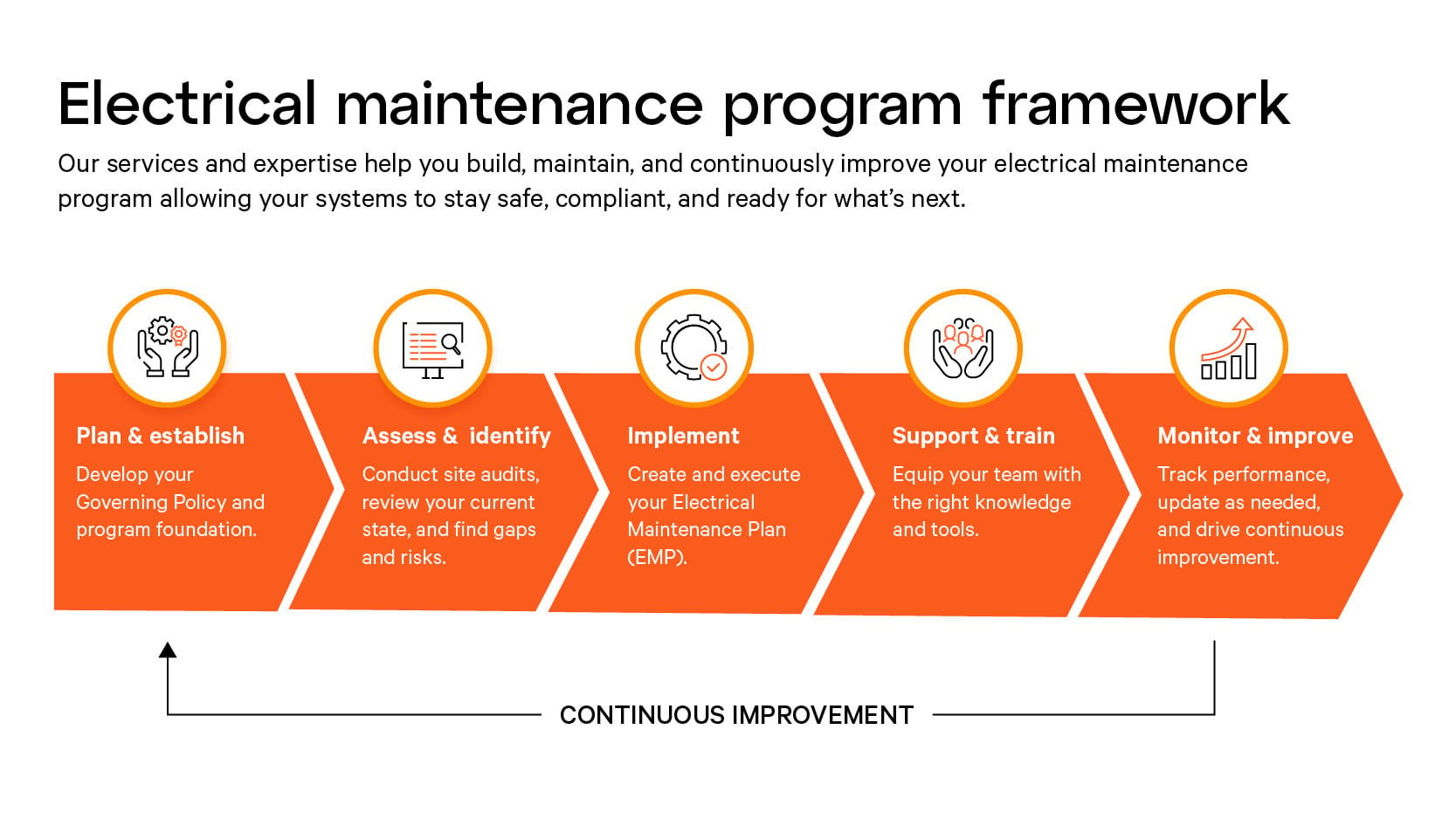
Developing an Electrical Maintenance Program is an ongoing process. ERS provides the expertise and guidance needed to help implement, evaluate, and continuously improve their maintenance programs.
FAQs
Is NFPA 70B mandatory?
The 2023 edition of NFPA 70B transitioned from a Recommended Practice to the Standard for Electrical Equipment Maintenance, establishing requirements for an Electrical Maintenance Program. However, NFPA 70B is not automatically mandatory solely because it is an NFPA Standard. Organizations should evaluate how the standard applies to their facilities based on adopted codes and regulations, AHJ requirements, insurance requirements, contractual obligations, and operational objectives.
What is an Electrical Maintenance Program (EMP)?
An Electrical Maintenance Program (EMP) is a documented program that establishes maintenance objectives, inspection procedures, testing activities, maintenance schedules, documentation requirements, and responsibilities for maintaining electrical equipment throughout its lifecycle.
Who should implement an Electrical Maintenance Program?
Any organization responsible for maintaining critical electrical equipment can benefit from implementing an Electrical Maintenance Program. Manufacturing facilities, healthcare organizations, utilities, data centers, commercial facilities, and industrial operations commonly develop EMPs to improve electrical reliability and maintenance consistency.
What is included in a governing policy?
A Governing Policy defines the structure of an Electrical Maintenance Program by establishing maintenance objectives, responsibilities, documentation requirements, maintenance strategies, and program oversight.
What happens during an NFPA 70B site audit?
An NFPA 70B Site Audit evaluates existing maintenance practices, documentation, inspection procedures, testing activities, and overall program implementation. The assessment identifies opportunities for improvement and provides recommendations to strengthen an Electrical Maintenance Program.
How often should an Electrical Maintenance Program be reviewed?
An Electrical Maintenance Program should be reviewed periodically and revised as needed based on equipment condition, maintenance findings, failures, changes to equipment or operating conditions, changes in maintenance procedures, and applicable standards. NFPA 70B requires the EMP to include a program review and revision process that supports continuous improvement.
What is the difference between NFPA 70B and NFPA 70E?
While both standards support electrical safety, they serve different purposes. NFPA 70B focuses on developing and maintaining an effective Electrical Maintenance Program (EMP) through inspections, testing, preventive maintenance, and documentation. NFPA 70E focuses on protecting employees from electrical hazards by establishing requirements for electrical safety programs, safe work practices, arc flash risk assessments, and employee training. Together, the two standards help organizations improve equipment reliability while reducing workplace electrical hazards.
Documents and Downloads
